
Via San Cesareo is the place to be for a real look at the side of Sorrento that usually stays hidden. It is a charming old street packed with noble palaces, wavy balconies, and ancient facades that have survived centuries of change. Peeking through the narrow doorways even reveals some beautiful hidden gardens and courtyards that feel like private oases away from the crowds.
There is a common tendency to assume that Corso Italia is the main road, but Via San Cesareo was actually the center of town for centuries. It was built right over an old Roman decumanus, and every stone has a story to tell about a noble past. Walking here feels like a trip back in time, where the scent of drying laundry and fresh lemons fills the air. Long before the "new street" (Corso Italia) was built in the 1800s, this lane was the city's main artery. It is even named after a 9th-century admiral, Caesarius of Naples, who led the local fleet back in the day and played a vital role in defending the Duchy of Naples.
Built for protection
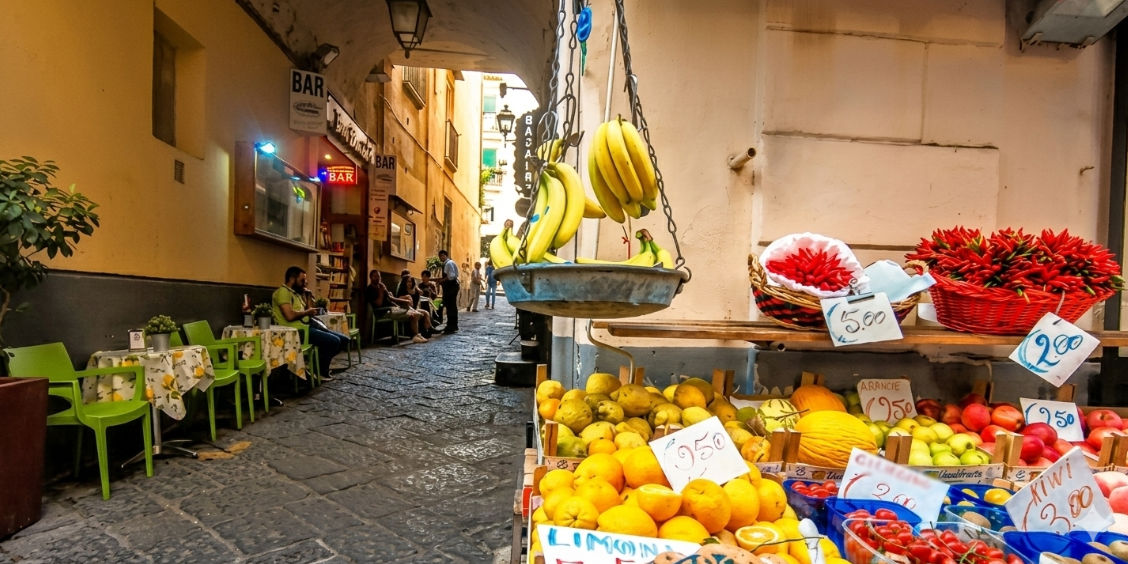
The layout of Via San Cesareo is actually pretty clever and reflects a deep understanding of urban planning. It follows a "grid" style, known as the Hippodamian plan, where streets cross at right angles to create perfectly organized blocks. This wasn't just for looks, it was a smart way to defend the city against constant threats. Since Sorrento is so close to the sea, Saracen pirates used to raid the town all the time, seeking wealth and captives.
These narrow, organized streets made it much easier for locals to control the area, create bottlenecks, and fight back against invaders. Today, these tall buildings still do a great job of blocking the sun, making the street a nice, cool sanctuary during those hot summer afternoons. The limestone and tuff walls absorb the heat, keeping the ground level refreshing even when the Mediterranean sun is at its peak.
Local crafts and bites

Today, this street is a world-class spot for some high-quality local shopping and cultural discovery. It is the perfect place to find those famous Sorrento souvenirs that represent the area's artistic legacy. Workshops are everywhere, selling hand-painted nativity figures and those super delicate "intarsio" music boxes that play traditional melodies. This inlaid wood craft is a huge part of Sorrento’s history, requiring months of patient work for each piece. But it is not just about shopping, the street is a feast for the senses. The air here smells like fresh lemons because of all the shops selling Limoncello.
It is often possible to watch the production process right there in the shop, seeing how the zest of the Sorrento lemon is transformed into the golden liqueur. There is also plenty of Positano-style fashion made from light linen and hand-embroidered clothes for kids. And for those getting hungry, there are tons of cute bars and restaurants serving up fresh local seafood like octopus salad or mussels in a cozy atmosphere.
Ancient noble homes
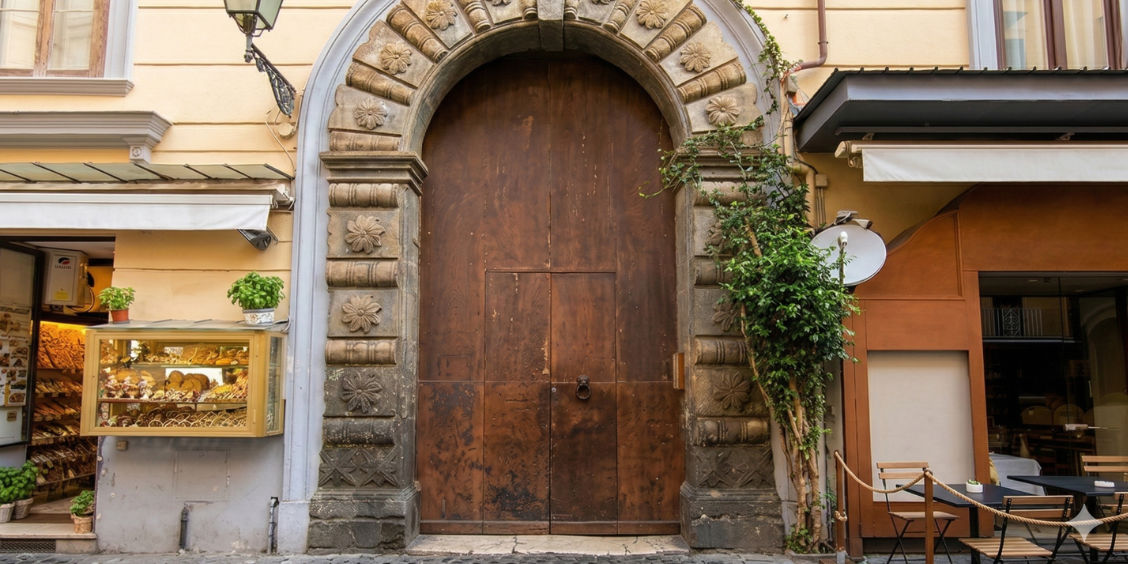
The buildings here are a mix of 16th to 18th-century styles, showing off that famous Neapolitan Baroque look with all its theatrical flair. The most interesting part involves the massive stone portals at the entrances, which served as status symbols for the local elite. Most of them haven't changed at all over the years, preserving the original carvings and heavy wooden doors.
Some of the best ones are right near the Sedil Dominova, which was the official meeting place where the noble families used to gather in the piazza (square) to discuss city politics. This building is famous for its large dome covered in yellow and green majolica tiles. At numbers 61 and 81, there are some truly unique portals with huge stones and fancy decorations that reflect the wealth of the owners. They lead to corridors that still have the old family crests on the ceilings, showcasing the symbols of power from a bygone era. Another must-see is number 101, which was once the home of the Donnorso and Maresca families, some of the most famous names in the city of the poet Torquato Tasso. It is definitely worth a look for anyone interested in the architectural heritage of the coast.